Salt, Earth, and Cider: Culinary Legacies of the Basque Coast
Words by Editorial Staff • Published April 02, 2025 • 9 min read
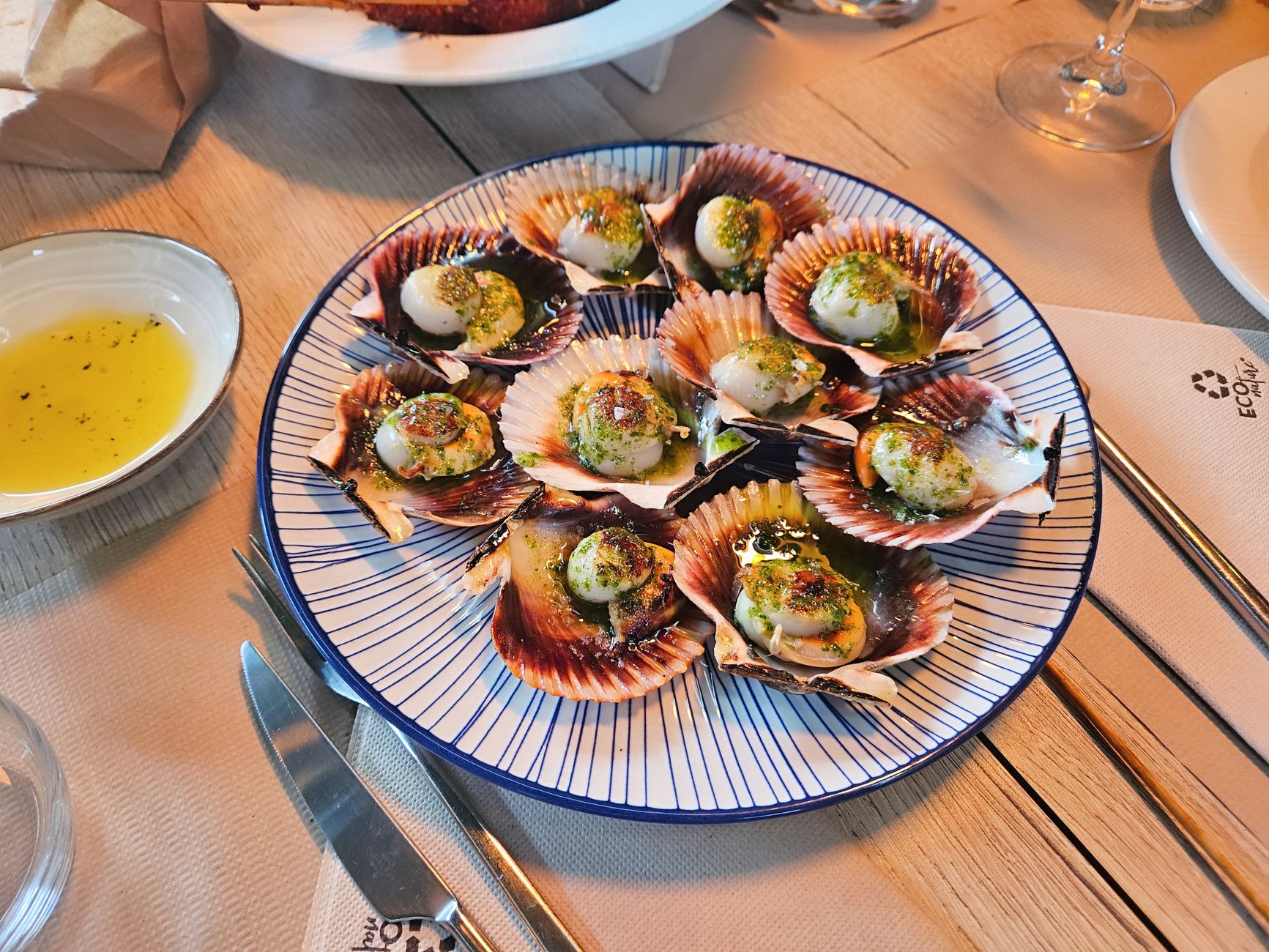
Where steep green hills drop directly into the cold swells of the Bay of Biscay, culinary culture is treated not as entertainment, but as an ancient civic contract between landscape, sea, and cook.
Beyond Michelin-Starred Grandeur
While the region is famous for its concentration of elite tasting menus, the genuine soul of Basque eating thrives in coastal sagardotegiak (traditional cider houses) and modest dockside grill houses known as asadores.
In towns like Getaria and Hondarribia, whole turbot and sea bream are suspended in wire baskets directly over charcoal pits fueled by holm oak. There are no heavy sauces—only fresh sea salt, garlic-infused olive oil, and a dash of local txakoli white wine or apple vinegar.
The Philosophy of Provenance
Every ingredient tells a geography lesson. Sheep grazing high in the Aralar mountains yield milk for Idiazabal cheese, while small coastal family orchards harvest acidic native apples for spontaneous barrel fermentations.